Showing posts with label Family Event. Show all posts

Friday, May 13, 2011

ロバート・ジェイ・リフトンNYT紙寄稿 『フクシマとヒロシマ』 和訳 Robert Jay Lifton's Op-Ed in New York Times: Hiroshima and Fukushima (Japanese Translation)


Robert Jay Lifton
広島の被爆者の心理的研究をもとにした古典的著作 Death In Life (初版 1967 年、日本語訳は『死の内の生命』という題で1971年朝日新聞社から出版、その後2009年に 『ヒロシマを生き抜く〈上・下〉―精神史的考察』 (岩波現代文庫)という新題で再出版)、他ジェノサイド研究、日本ではオウム真理教研究でも知られるアメリカの精神科医、ロバート・ジェイ・リフトン氏が福島原発事故を受けて、ニューヨークタイムズ(4月15日)に寄稿した論説文の和訳を紹介します。原文も下方に転載しております。「ヒロシマ」と「フクシマ」と同じでないとしながらもその根底にある核という技術と人間との関係を深く考えさせられる一文です。大江健三郎氏が『ニューヨーカー』誌に寄せた文も併せてお読みください。

ニューヨーク・タイムズ

フクシマとヒロシマ ~原子炉と原爆~

ロバート・ジェイ・リフトン

2011年4月15日

マサチューセッツ州ケンブリッジ発 —

核に対する恐怖ほど、急速に地球全体に広まるものはない。

福島で原子炉が部分的炉心溶融を起こしたことで、周辺の住民たちに計り知れない恐怖感を抱かせ、日本の他の地域の人々にも少なからぬ恐怖を与え、アジア全域やヨーロッパ、アメリカの人々にさえある程度の恐怖をひき起こした。

そしてまた、この恐怖は単なるヒステリーとして無視できるものでもない。この恐怖は、アジア以外の大陸では誇張されることもあるだろうが、実際には、原子炉で何が起こるか、風がどのように吹くか、どのような種類の放射性物質が吹き上げられるかによって、危険は重大なものになり得る。そのうえ、様々なレベルの放射能が人体にどのような害を及ぼすかという知識はまだ十分に行き渡っていない。

「フクシマ」は「ヒロシマ」とはもちろん異なる。人類を最も危険にさらしているのは核兵器である。しかし核兵器と同じように、原子力発電所から放出される放射能は、広島について私が「見えない汚染」と書いたのと同じで、その毒は、目に見えず臭いも手触りもなく、その影響はあまりにも長く続き、たとえ1年あるいは1世代のうちに影響が現れることが無くても、次の世代に影響を与えるかも知れないものである。一人の生存者が私に語ったように、「 外見は健康そうに見えるかもしれないが、まったく突然に体調を崩し、そして病気になって死ぬ。」

数十年前、私が取材した広島の生存者たちは、放射能によるグロテスクな症状を見たり経験したりする恐怖を口々に語っていた。急性症状としては、激しい下痢、体中の穴からの出血、皮下に内出血してできる恐ろしい「紫斑」、極度の倦怠感があり、その多くは死に至る。遅れて現れる症状としては、原爆投下直後の数年間に白血病が多発し、その後は甲状腺癌や胃癌、肺癌、卵巣癌や子宮頸癌が多発する。放射能は何世代にもわたって遺伝的影響を残す可能性があることが知られているので、広島では奇形児を産むことへの強い恐怖が広がった。

福島の事故に関連しては、このようなことは何も起こらないかも知れないし、事故を起こした原子炉が適切に処置、冷却されて大規模な核惨事を回避するというのは十分に有りうることだ。しかし原子炉と原爆は同じ種類の技術を使っているのだから、原子炉から放出された放射能が核兵器によるものと同じような恐怖をひき起こしても驚くには当たらない。

スリーマイル島でも同様だった。放出された放射能は福島よりも少なかったが、それでも人々は見えない放射能汚染をめぐるありとあらゆる恐怖を訴えた。チェルノブイリ原発事故でもこのような恐怖が広がり、今日に至るまで完全に消え去ったとはとても言えない。このような見えない汚染への恐怖は各地で被曝したアメリカ人たちにも広がった。長崎原爆の製造に関わったワシントン州ハンフォード・サイトのプルトニウム廃棄物、コロラド州ロッキーフラッツでの何十年にもわたる核実験、核爆発のすぐ後に兵士たちが行軍させられたネバダ州の核実験場での爆心地での被曝である。

原爆被害の経験をもつ日本がどうしてその原爆を作った核技術で電力の3分の1を作るほどの依存を自ら許してしまったのかと、疑問に思う人もいるだろう。実は、抵抗運動はあったのだ。多くは広島と長崎の生存者からのものだった。

しかし、そこにはまた否定や隠蔽、業界と政府の癒着といったお決まりの図式が存在していた。官業癒着の問題は日本に限られた問題ではないが、日本では特にひどかった。それでも原子力推進派は、「原子力と核兵器は違う」という二分法を人々の心に植え付けることによってやっと主流派になれた。人を欺くこの論法は、日本だけでなく世界中で用いられた。

また、世界を滅ぼす畏れ多い核の神から、平和的で人々の生活を向上させるものが生み出せるのではないかと期待もある(ここでまた原子力と核兵器の技術が同じであるということを認識する)。この兵器を開発し製造した我々人類が、同じ究極の技術から何かの形でその償いを見出すことができるのではないかという望みである。そして原子力は統計的には安全であるとする「リスク・アセスメント」研究があるが、これらの研究は極端な自然現象や人為ミス、技術的な誤動作について説明しきれていない。

福島での放射能の危険のことを「この世の終わり」のように語ることに異議を唱える人々もいる。確かに、いたずらに恐怖を募らせるような誇張表現は、あらゆる場面で避けるべきである。しかし、そもそもこの恐怖の対象の本質が終末をもたらすようなものであり、人類は自らの種を絶滅させることができる技術を作り出してしまったという認識が根底にあるからこそ、そのようなもの言いになるのである。この点においても、核による「爆弾」と「炉」の密接なつながりは、払拭できるものではない。

われわれは、この(核兵器と原子力が別物であるという)否定と分離を乗り越えて、発生源がどちらであっても放射能の影響は同じだということを認めるべきである。また、自然災害と人為ミスが重なると、いかなる技術も完全に安全とは言えないことを認めるべきである。さらに、この最も危険な技術を当てにして、何か「クリーン」で純粋なものを生み出すとか、そうでなければ何らかの罪滅ぼしになるものをもたらすことなど、およそ不可能だということを認めた方がよいのだ。

ロバート・ジェイ・リフトン
ハーバード大学医学部精神科講師。著書に “Death in Life: Survivors of Hiroshima”( 『ヒロシマを生き抜く〈上・下〉―精神史的考察』 (岩波現代文庫))。回顧録 “Witness to an Extreme Century” を近日出版予定。

(翻訳 酒井泰幸・乗松聡子 タイトルの副題は訳者がつけました。)

Translation by Yasuyuki Sakai and Satoko Norimatsu


The New York Times
April 15, 2011

Fukushima and Hiroshima

By ROBERT JAY LIFTON

CAMBRIDGE, MASSACHUSETTS — Nothing is more rapidly globalized than nuclear fear.

The partial meltdown of reactors in Fukushima, Japan, has created overwhelming fear in people living nearby, considerable fear in people living in the rest of Japan, and a certain amount of fear in people throughout Asia and even in Europe and the United States.

Nor can this fear be simply dismissed as hysteria. It can be exaggerated — especially in relation to other continents — but the fact is that, depending on what happens to the reactors, how the wind blows, and what kind of radiation plume develops, the danger could be grave. Moreover, there is still much ignorance about the kind of harm done to human beings by various levels of radiation.

Fukushima is not Hiroshima; it is nuclear weapons that most endanger mankind. But as with nuclear weapons, the radiation released by power plants is a form of what in writing about Hiroshima I called “invisible contamination” — a poison that one cannot see, smell or feel, and whose effects are so lasting that, even if they do not show up in one year — or one generation — they may well do so in the next. As one survivor put it to me: “You may look healthy from the outside but all of a sudden something goes wrong and you are sick and you die.”

When I interviewed survivors in Hiroshima decades ago, they described their terror at witnessing and experiencing grotesque radiation symptoms: acute effects of severe diarrhea, bleeding from various bodily orifices, dreaded “purple spots” from bleeding into the skin, extreme weakness and frequently death; and delayed effects including increased incidence of leukemia during early post-bomb years, and later of cancer of the thyroid, stomach, lung, ovary and uterine cervix. Since it is known that radiation can have genetic effects over the generations, there was much fear in Hiroshima about giving birth to abnormal children.

None of this may happen in connection with Fukushima, and it is quite possible that reactors there will be sufficiently treated and cooled to avoid a large-scale nuclear disaster. But we are talking about the same technology, so we should not be surprised that radiation released from reactors creates nuclear fear similar to that associated with the weapons.

I found this also to be true at Three Mile Island, where less radiation was released than at Fukushima, but people nonetheless expressed the full panoply of fear associated with the invisible contamination of radiation. Such fear has pervaded the nuclear accident at Chernobyl, and has by no means entirely disappeared to this day. The same fear of invisible contamination occurred in Americans exposed to nuclear radiation in various other places: to plutonium waste at Hanford, Washington, in connection with the production of the Nagasaki bomb; to nuclear testing over decades at Rocky Flats, Colorado; and to Ground Zero at test sites in Nevada, from which G.I.’s were marched shortly after nuclear explosions.

One may ask how it is possible that Japan, after its experience with the atomic bombings, could allow itself to draw so heavily on the same nuclear technology for the manufacture of about a third of its energy. There was resistance, much of it from Hiroshima and Nagasaki survivors.

But there was also a pattern of denial, cover-up and cozy bureaucratic collusion between industry and government, the last especially notorious in Japan but by no means limited to that country. Even then, pro-nuclear power forces could prevail only by managing to instill in the minds of Japanese people a dichotomy between the physics of nuclear power and that of nuclear weapons, an illusory distinction made not only in Japan but throughout the world.

There is also the hope (and here the sameness of the technology is recognized) that something peaceful and life-enhancing can be derived from the awesome, world-destroying nuclear deity; that we humans who commissioned and built the weapons can somehow find redemption in that same ultimate technology. And there are the “risk-assessment” studies that find nuclear power quite safe in statistical terms, failing as these studies do to account for extreme events of nature as well as human error and technical malfunction.

Some have been objecting to the “doomsday language” used in connection with Fukushima’s radiation dangers. And it is true that exaggerations at all levels should be discouraged, exacerbating as they do fears on the part of everyone. But that doomsday language has its source in the doomsday nature of the stuff that is feared, and in the realization that we have created a technology with which we can annihilate ourselves as a species. Here too the association between bomb and reactor cannot be willed out of existence.

We do better to overcome our denial and dissociation and to instead acknowledge that radiation effects are one and the same no matter what their source, that the combination of nature and human fallibility makes no technology completely safe, and that the technology most dangerous to us can hardly be relied upon to provide something “clean” or pure, or to otherwise redeem us.

Robert Jay Lifton is a lecturer in psychiatry at Harvard Medical School, and the author of “Death in Life: Survivors of Hiroshima” and the forthcoming memoir “Witness to an Extreme Century.”

Thursday, September 03, 2009

White Rock Meeting September 2009 ホワイトロックの会のお知らせ

The White Rock Group has been hosting bi-monthly meetings on various topics on peace and sustainability. This month, we will welcome Mariko Ishikawa, from Organic Life Circle. Mariko will share her rich knowledge of food and safety. The meeting will take place at 1:30 PM, Saturday September 12th. For more information, email whiterock@peacephilosophy.com

ホワイトロックの会のお知らせ

9月のホワイトロックの会は オーガニックライフサークルの石川まり子さんに 来ていただくことにしました。

私達は 毎日 家族の健康を考えながら 台所に立ち 食事を支度をしています。台所を預かる者として 私達が知っておきたい食の安全を中心にまり子さんに 話をすすめていただこうと思っています。石川まり子さんは とても 気さくな方で お話もおもしろく きっと 楽しい会が持てると思います。常日ごろ 食に関して 疑問に思っていることや 参加される他の皆さんと 分かち合いたい情報などがありましたら どうぞ お聞かせください。

日時: 9月12日 土曜日 1時30分
参加希望の方は whiterock@peacephilosophy.com にご連絡ください。場所をお教えします。


真理子

Friday, June 12, 2009

Family Event: Earth Brothers ~planting seeds of peace~

On the 7th of June, we had a family event entitled "Earth Brothers ~Let's Plant Seeds of Peace" at Audrey's house in North Vancouver.


It was a very meaningful and peaceful Sunday afternoon- the house was full of laughter, smiles, music, dances.....

For the story time, Sayuri and Noriko performed a very pretty doll play, "Stone Soup".

Joyfulness and happiness are something "we" create. They are not something just out there. They can be true only when we "share" with others.


As one of the activities for the event, each of us were asked to list " 9 things that make you feel "peace"" ( The reason for choosing the number "9" is that this event was sponsored by Vancouver Save Article 9 Association :-))

Each of us chose different things, but still, I could see there are sort of "common" image for "what is peace". Five super lucky people were picked up, and what they wrote were introduced to everyone. Those were such as Pigeon, Flowers, Nature, Laughter, Children's smiles, The Sun, and so on, and they were the same or similar ones to what I chose.

I, personally, listed these; Family, Friends, Children, Smile, The Sun, The Moon, Winds, Clear Blue Sky, Music. I talk about "Love and Peace" and I believe in "Love and Peace"; but contradictorily, I am not sure what exactly the definition of "Love and Peace" is....How do YOU define "peace"/ "love and peace"?

This song, "The Earth Brothers" composed by Kyogo Kawaguchi, seems to be giving us some hints to it. It might be to see yourself and others as "one", the "oneness".....We sang this song along with Taro's guitar and people's claps. We made Korean, Chinese, and English version for the main part of this song, and it made our singing much more fun!;-)

You can listen to the original full version of this song, sang by Kyogo Kawaguchi and other musicians here--> http://www.chikyukyodai.com/

The lyrics we edited for this event is following;

青い青いこの星に生まれた
みんな繋がって生きている兄弟さ

思い浮かべてみよう
世界中の人の笑顔
大人も子供もほらみんな笑ってる

ニューヨークの人もバンクーバーに住む人も
北京やソウルや東京の人も

国や政治や宗教や歴史もあるけど
同じ人として愛をもって さあ共に歩こう

青い青いこの星に生まれた
みんな繋がって生きている兄弟さ

You and me, You and me
We are born on this beautiful star
We are one, all together
Watch the seeds of peace bloom for you.

思い浮かべてみよう
争いのない一日を
悲しみの涙を誰も流さなくていい日を

飢えや貧困や思想の違いや差別
一人の人として愛をもって何が出来るだろう

青い青いこの星に生まれた
みんな繋がって生きている兄弟さ

푸르게 빛나는 아름다운  별에 태어난
모두가 하나되어 살아가는 우리는 형제

好兄弟 好姐妹
我们住在这地球的堡垒
怎么分东南西北
该像一家人相交汇

青い青いこの星に生まれた
みんな繋がって守ろう9条を

You and me, You and me
We are born on this beautiful star
We are one, all together
Watch the seeds of peace bloom for you.

I really hope that I have other chances to sing this song with you again, and spread the words and music to more people.


Thank you very much everyone who were there!

Shoko

Sunday, December 07, 2008

Bonenkai was a huge success!

Dear friends and colleagues,

It was a magical evening. Thank you so much for coming. For those who couldn't make it, we still felt your presence.

I just mentally counted and figured we actually had 60 people! We had downsized but somehow everyone looked comfortable and the house didn't look small at all. Thanks for the great food and drinks! Somebody left a ceramic plate with brown rings on it. Let me know if it's yours.

The 'peace sharing' time was so inspiring and fun. Thanks for all your contributions of music, stories and presentations - Mike, Minoru,Lorraine, Mihoko, Susan, Clover group, Kyoko and White Rock group,Chihiro and Kay, Sayuri and Dunc, Norman, Mariko and her amazing kids,Tomo, Katsuko and Eiichiro Ochiai, Thekla, Kozue, Arc, and all the other informal sharing and mingling throughout the evening, which empowered and filled each of our heart with love and renewed determination for our work for peace.


The day before our event Dr. Shuichi Kato, who was among the nine intellectuals and authors who started the Article 9 Association in 2004,died at age 89. Kato spoke at Vancouver Save Article 9's launching event in May 2005. Kato's group successfully networked more than 7,000citizens' organizations working for preserving the peace constitution. Japan gained the constitution which included Article 9, the war-renouncing clause after the wars of Asia-Pacific in which Japan caused deaths and suffering to millions of people in Asia and beyond. It was very special to be able to give tribute to Kato during our event. Thank you Mihoko for sharing your memory of him.


I look forward to your comments and feedback (English or Japanese please) on last night and above all I wish you a restful and loving holiday time to you all. I look forward to more sharing in the new year.


Lots of love,


Satoko

Sunday, May 04, 2008

世界会議記念バンクーバーイベント An Article 9 Event in Vancouver

すごいイベントとなりました!9条世界会議を記念し応援するバンクーバーのイベントには50人近くが参加しました。ホストとなってくれたオードリー・ホワットソンさん、ノースバンクーバーの素晴らしいお家を開放してくれてありがとうございました!大きなバルコニーで、バンクーバーの街と海を背景にみんなで記念写真を撮りました。子どもたちが、書家の方が書かれた九条を掲げています。


What a blast! We had close to 50 people at the Vancouver event to commemorate and send support to the Global Article 9 Conference. Thanks Audrey Howatson for opening up your beautiful home with this huge deck, where we took this group photo, with children holding the beautifully calligraphed Article 9 in Japanese.


今回はバンクーバー九条の会が共催している「世界を九条に」の分科会を開催している時間と同時進行で行われました。日本では5月5日午前10-12時、バンクーバーでは5月4日午後5-7時でした。幕張の会場とインターネットでつないで応援を届けるという計画がありました。それはテクニカルな問題でできなかったのですが、日本に私たちの応援のエネルギーが届いたと願っています。


This event was held concurrently with the workshop co-hosted by Vancouver Save Article 9 and Geneva Peace Group on the second day of the Global Conference. In Japan, it was 10 AM - 12 PM of May 5th, and in Vancouver, 5 - 7 PM of May 4. We had a plan to live-link Makuhari and Vancouver through the Internet. We had technical difficulties and could not carry out this plan, but I hope our energy or support reached Japan!

この日、日本では子どもの日でもありました。幕張の会議で子どものイベントがあったかはわかりませんが、9条という大切な保証のある世界に子どもたちを送り出したい、そういう思いで子どもたちやファミリーが参加できるイベントにしました。平和教育に熱心な幼児教育者、石本さゆりさんと芦澤法子さんのアクティビティに、子どもたちも大人たちも引き込まれていきました。

May 5th is the Children's Day in Japan. I do now know if there was an event for children at the Makuhari Conference, but the intention of our event was to send children to the world that has the guarantee of Article 9 - a world with the promise of no wars. Early childhood educators Sayuri Ishimoto and Noriko Ashizawa facilitated activities for children which brought hopes for the future and brought lots of smiles also to all the adults in the room.


法子さんは、世界的に人気のあるエリック・カール作「はらぺこあおむし」を大きな本とあおむしのぬいぐるみを使って読み聞かせました。皆がびっくりしたのは、あおむしは、蝶に変身する前にいったんさなぎの中でとろとろに溶けてしまうということです。ノリ・ハドルと きくちゆみ作の本「バタ
フライ」の話も応用し、法子さんは、あおむしが蝶になっていくという、誰もが知っていることが実際に起こる過程での奇跡を私たちの眼前で見せてくれました。そしてそれは「私たちは私たちが想像もつかないものになれるのだ」ということを示してくれているのです。

Noriko read Hungry Caterpillar, a well-known children's picture book by Eric Carle. We were all amazed to know that a caterpillar actually melts down in its cocoon before it transforms into a butterfly! Adopting the story of Norie Huddle and Yumi Kikuchi's book "Butterfly", Noriko demonstrated the miracle of the caterpillar-butterfly transformation, which we are all familiar with. It is a proof that we can all become something that we have not even imagined!


9条は可能です。
Article 9 is possible.


Imagine all the people, living life in peace........
Imagine all the people, sharing all the world........

『イマジン』を歌ってくれた まほさんと なおきさん、ありがとう。
Thanks Maho and Naoki, who performed "Imagine" for us.


世界をまたにかけ活躍するストーリーテラー、ダンク・シールズさん。「敵」という言葉がわからないので「敵同士」になってたくさんの遊びを一緒にする「サメとタコ」の話をしてくれました。そして、広島に明日落ちる原爆を止めようとする一羽のカナリアの話・・・胸が詰まる思いで聞きました。

An international storyteller Dunc Shields told a story of a shark and an octopus
who play so much together as 'enemies' without knowing the meaning of the
word. And a story in which a little canary tries to stop the atomic bomb being dropped in Hiroshima... it touched me deeply.

日本の市民による九条の会は7,000を超えたという。そしてここバンクーバーをはじめ世界中にも。
世界中にカナリアの声を響かせよう。
Now there are more than 7,000 Article 9 associations in Japan and beyond.
Imagine all the canaries singing around the globe...
ありがとう。心より。
Thank you. From the bottom of my heart.
With lots of love and hope,
Satoko Norimatsu 乗松聡子

Monday, April 28, 2008

May 4 Article 9 Event in Vancouver concurrent with Global Conference in Japan

The Global Article 9 Conference (May 4-5 in Japan) is approaching!

We are going to hold a potluck event on May 4th, happening simultaneously with the VSA9's workshop at the Global Conference in Makuhari, Chiba. It will be held at Audrey Howatson's house in North Vancouver. The purpose of this event is to show support to the Vancouver delegates to the Global Conference and really for us in Vancouver to celebrate the first-ever international conference on the peace constitution. In fact,we will attempt to live-link between Makuhari and Vancouver using SKYPE. All are welcome, and there will be activities for children as well.

The host of the evening Audrey Howatson has done Peace Boat's global cruise 5 times and has been involved with numerous environment and peace initiatives including the across-nation bike ride from Hokkaido to Okinawa in Japan. Thank you Audrey for kindly offering your place for this event!

Time: 5 -8 PM, May 4th (Sunday) Place: Audrey's house in North Vancouver - email event@peacephilosophy.com for details.

Dinner: Potluck please. We tend to get too many desserts, so please bring something other than desserts, thank you. Please bring your own cup, place, cutlery - it is a garbage-free event.

For the environment, please use transit or carpool. Drivers of carpooled vehicles will get a present (limit 10, first-come, first-served) at Theodor! Please let us know if you would like to carpool, whether offering or requesting a ride.

There is no fee, but small donations will be welcome, for future peace activities in Vancouver.

RSVP by May 3rd to Chizu Kanada event@peacephilosophy.com. Let us know how many adults and children are coming. Ages of children requested as well.

Organized by: Vancouver Save Article 9 Peace Philosophy Centre

Sunday, February 03, 2008

Yumi Kikuchi and Gen Morita to Give a Talk in Vancouver きくちゆみ・森田玄 バンクーバー講演

きくちゆみ 森田玄
バンクーバー訪問記念イベント

自分を癒す 地球を癒す
~ハーモニクス ライフが私にもたらしてくれたもの~

日時 2月24日 午後1時30分 ~ 午後3時30分 
        (開場 午後1時)時間通りに開始します

場所 バンクーバー日本語学校 3階
   住所 487 Alexander St. Vancouver

会費 一人10ドル

内容 ハーモニクスライフとはどんなものなのでしょう?
  地球に優しい暮らしは、その人を元気に美しくしてくれます。
  自然とともに共存する、きくちゆみさんと森田玄さんの自給的な生活、
  育児体験談、そして、食の安全や健康についてお話していただきます。

  講演を1時間ほどしていただいた後、質疑応答、交流会の時間を設けます。

定員は50名とします。定員になりましたら締め切らせていただきますので、お早めにどうぞ。先行予約を受け付けます。2月10日までにお申し込みください。

申し込み、お問い合わせは

石本さゆりまで (604)314-2819  もしくはiyasu@peacephilosophy.com まで

注*協賛の団体から同じ案内をいただいた方は申し込みは一回で大丈夫です。
その際、どの団体の窓口からでも構いません。

交流会の際、こちらでお茶をご用意します。また、タマ・オーガニック・ライフより大人気のおはぎ、そしてマクロビオテックの紹介の一環として参加される皆さんに楽しんでいただける差し入れを検討しております。

このイベントでは、ゴミゼロを目指します。各自、水、マグカップ、お皿、フィークをお持ちください。お子さまの飲み物やおやつも各自ゴミが出ないような形でご持参下さい。また、ゴミは各自で持ち帰っていただけますようよろしくお願いします。

お子様連れの方の為にプレイエリアを設けます。日本語学校で経験のあるお姉さんたちが、ストーリーなどを始め、一緒にアクティビティをしながら過ごしてくれます。ご利用の場合、会費とは別途にお子様一人$3をお願いしております。おやつと子供用の飲み物は各自持参となります。事前に大体の人数を把握したいと思いますので、お申し込みの際、利用されるお子様の人数をお知らせください。


~プロフィール~

きくち ゆみ

グローバルピースキャンペーンの呼びかけ人として世界平和と環境保護をテーマに各地で講演する一方、千葉県鴨川の築200年の自宅をハーモニクスライフセンターとして運営する。夫である森田玄氏と共に自給的な生活を基盤に、自然療法セミナー、自然食ワークショップを開催。「子どもたちに安心して住める地球を手渡すこと」が、人としてそして母としての責任と言うきくちさん。まずは地球の一部分である自分自身を大切にすることから始め、それが地球全体を癒す事につながるという生き方を実践しています。元気いっぱいの四児のお母さんでもあります。

森田 玄

千葉県鴨川のリモ農場の主人で、自称「楽農家」。かつては現代医学と栄養学に頼りきったストレスフルな生活を送っていたと言う森田さん。ご自身のからだの不調をきっかけに訪れた千葉県鴨川で、「自然の一部としての自分の存在」を見つめなおした。その後、「快療法」と出会い自分の中に宿る自然治癒力のパワーに気づかされる。普段は妻・きくちゆみさんと共に農場で無農薬・無化学肥料の自然農法で自給用の野菜とお米を作っている。自然界に生きる花、木、虫、動物たちのように自由で、共存し調和しながら生きていく暮らしを推進している。ハーモニクス・ヒーリングを世界各地で開催。

また、お二人はグローバルピースキャンペーンの活動で「メディアが伝 えないなら、自分たちがメディアになる」ことを目指して、『戦争中 毒』『デニスクシニッチ』『バタフライ』などの本や『テロリストは 誰?』『911ボーイングを捜せ』などの映画を翻訳して日本に紹介し ています。

ホームページ: きくちゆみのブログ http://kikuchiyumi.blogspot.com/ 
      
玄のリモ農園ダイアリー http://moritagen.blogspot.com/

Harmonics Lifeセンター http://harmonicslife.net/
お二人の著書:
『ハーモニクスライフ 自然派生活のすすめ』(合同出版 2005年)

主催 
★きくちゆみさんは、2月23日(土)に、英語にて平和関係の講演をおこないます。詳しくはこちらを。
        

Friday, February 23, 2007

(Japanese) Documentary Film 'Annyong Sayonara' Screening

Announcement of film screening 'Annyong Sayonara' Japanese version. Infomration of the English version is coming soon.

ピース・フィロソフィー・サロン 3月特別企画


ドキュメンタリー映画 「あんにょん・サヨナラ」

日韓両国語版先行上映会

★日時 3月10日(土)
第一回 2:10 PM - 3:57 PM (2時集合、2時10分上映開始)
第二回 5:10 PM - 6:57 PM (5時集合、5時10分上映開始)

★場所 ピース・フィロソフィー・センター (ノース・バンクーバー)

★会場までの詳しい行き方は申込みされた方に案内します。

★申込み info@peacephilosophy.com までどうぞ。2時の会か5時の会か、明記してください。

★定員 各回 大人 20名まで

★子連れ OKです。お子様の安全は保護者の責任となります。

★費用 大人一人5ドル 学生3ドル

★映画案内 http://plaza.rakuten.co.jp/annyongsayonara/ より。

日韓共同ドキュメンタリー「あんにょん・サヨナラ」
◆「あんにょん・サヨナラ」 とは、靖国をテーマにした日韓共同ドキュメンタリーです。  タイトルには 「日韓の辛い過去にサヨナラ、和解と未来よ、こんにちは」 という意味がこめられています。
「あんにょん・サヨナラ」 は、多くのインタビューから  靖国神社の本質を浮かび上がらせただけではなく、平和のために活動している人びとに勇気を与える作品です。  釜山国際映画祭 ドキュメンタリー部門最優秀賞受賞作品  山形国際ドキュメンタリー映画祭 アジア千波万波 特別招待作品
◆ストーリー  李熙子 (イ・ヒジャ) の父はアジア太平洋戦争中に日本軍に徴用され、中国で戦死した。  日本政府から、父について何の通知もなく、彼女が父の死の詳細を知るのは90年代に入ってからのこと。その上、父は遺族の知らないうちに靖国神社に合祀されていた。  父の命日に、父が死んだ場所へと旅するイ・ヒジャを追い、在韓遺族にとっての合祀の意味を訊ねる。墓石にアボジの名前を彫れるその日まで──。  イ・ヒジャの願いを共に叶えようとする日本の友人の姿は、イ・ヒジャの旅に新たな意味をもたらした。
◆2005年/107分/DV/日本・韓国  監  督 キム・テイル  共同監督  加藤久美子  助監督 ジヘ

Monday, February 19, 2007

VSA9 General Meeting 2007- Activities for Children

The 2007 Annual General Meeting of the Vancouver Save Article 9, or VSA9 was held on February 17th in Burnaby, BC.


There a picture book called 'Yurushi no Hana', or in English, 'Flower of Forgiveness' was introduced by Sayuri Ishimoto, as shown in the photo. It is a book related to the Miracle of Fushun workshop facilitated by Tatsuo Kage last November - how 1,000 Japanese POWs at the Fushun war criminal camp were transformed from 'devils' to 'humans,' by the humane treatment that they received at the camp. They came to repent their war crimes and became peace activists upon returning to Japan. One of the POWs was given some seeds of morning glory by a prison guard, who told him to go back to Japan to have a happy family life, and never to return to China with weapons. The former soldier and his wife grew these flowers, and they are still blooming today, 50 years after he came back from Fushun.


This book was published by this group that was established to maintain the 'Miracle of Fushun,' or 'Uketsugu Kai.' The book is in Japanese and Chinese, and they are working on the English and Korean translation right now. To order a copy in Japan, contact the Kyushu chapter of 'Uketsugu Kai' (Phone 090-9494-3698 Mr. Yasuoka) . Mr. Kage is accepting orders in Canada - if you would like to order, phone Mr. Kage 604-432-9017 or email VSA9 info@vsa9.com


Also at this meeting, Dunc Shields, a professional storyteller and I presented a story called 'My Enemy'(right photo by Tatsuo Kage). It is a story about this big blue shark and this tiny little octopus. The tiny octopus was told by his mother that the shark was the enemy. Neither the shark nor the octopus knew what enemy was, so they decided to become enemies together and had the most enjoyable play time together. Dunc told the story in English and I in Japanese, and we also sang Pete Seeger's Where Have All the Flower's Gone? with a little variation.


Where have all the flowers gone? Long time passing
Where have all the flowers gone? Long time ago
Where have all the children gone? Gone to soldiering, everyone
When will we ever learn?


In Japanese,


花はどこへ行った 時の彼方へ
花はどこへ行った 季節は過ぎて
子どもたちはどこだ みんな戦場に行った
いつ 私たちは 目が覚めるのか
いつになったら 目が覚めるのか


Thanks Dunc for your kind guidance to an amateur like me. I truly enjoyed the experience!


Love and peace,


Satoko

Sunday, November 26, 2006

A Song About the World Putting an End to War

Here is a song that Chihiro Otsuka shared with me, one that her daughter sang at the peace choir of her school. I was deeply moved by these lyrics and thought that it was the world adopting 'and practicing' the Article 9 of the Japanese Constitution. I visualize this song in my meditation. Is it something that one can only imagine? If everybody imagines it, it becomes reality. Thank you Chihiro for sharing this beautiful song! Love to the world, Satoko

Here is the song.

Last Night I Had The Strangest Dream (Words and music by EdMcCurdy)

Last night I had the strangest dream
I'd ever dreamed before
I dreamed the world had all agreed
To put an end to war

I dreamed I saw a mighty room
Filled with women and men
And the paper they were signing said
They'd never fight again

And when the paper was all signed
And a million copies made
They all joined hands and bowed their heads
And grateful pray'rs were prayed

And the people in the streets below
Were dancing 'round and 'round
While swords and guns and uniforms
Were scattered on the ground

Last night I had the strangest dream
I'd never dreamed before
I dreamed the world had all agreed
To put an end to war.

Sunday, November 19, 2006

(Japanese) Feedback to 'Tomorrow's World'

(This is the summary of the participants' feedback to the November 12 event, in Japanese.)

11月12日に開催されました「親子で創る明日の世界」に寄せられた感想からここにご紹介します。皆さんたくさん書いていただき、全て掲載したかったのですが、お忙しい皆さんに読んでいただけるくらいの量にまずまとめるのが大事と思い、「ダイジェスト版」を作りました。ここに載っていないことでたくさんの素晴らしいご意見やご提案がありましたのでそれはまた別の方法で皆さんと share したいと思います。ありがとうございました!

  • できるところから、小さいことから始めるという物事の基本に沿って進めていけばそれが大きな力になりますから自身も少しづつですが、学びながら地球保護の為に初めていきますよ。
  • 小さい子供たちにはよく理解できる内容であったと思います。教育という観点から見ても素晴らしいイベントでした。
  • 法子さんのクリエイティブさ、子供達の心をつかむ生き生きとした表現には脱帽です。
  • 幸せで当たり前な状況から、平和でない世界はどういう世界なのかを想像させる展開は、平和とは何かを認識する、または、させるためにとても有効な方法だと改めて感心させられました。
  • まきえさんの手作りのアーモンドクッキーとさつまいもの茶巾は、甘さが控えめで、
    とてもおいしかったです。
  • さゆりさんの環境に関するお話が、瞑想から入るというアイデアはとても斬新で、Breakの後に、気持ちを切り替える、トピックに気持ちを集中させる上で、とても効果的だったと思います。地球は泣いている、言葉を話せない動物に代わってのさゆりさんの語りは、ほんとうに引き込まれました。
  • まず、私ができることは、ハンカチを持参して、ペーパータオルを使わない。ショッピングバックを持参する。使わない電気は消す。(特にパソコン)トイレットペーパーはミシン目3つまで。お箸、又はフォークを学校に持参する。以上の5つは必ず実行します。
  • トップダウン式のお勉強ワークショップではなく、「優しい」「楽しい」「うれしい」=平和、に対峙するところの「乱暴な」「怖い」「悲しい」=戦争を擬似体験する旅にいかせてもらったような気がしてます。平和への第一歩として、子供も大人も一人一人が「私にとっての平和」を心に描くことから、まずは始めてみればいいんだなと気づかせてくれたワークショップでした。パート2では、家庭でできるCO2削減ということで、自分への課題を出したので、ちゃんとやらないとなーと思ってます。娘は結構チェックが厳しいのでがんばります。
  • イベント後、帰宅してから子供が部屋の電気を消して歩いてくれたことも大きな収穫でした。やはり意識があるのとないのとでは差が出ますね。
  • 愛する人が幸せな時を絵に描くと言うのは子供たちに相手を思いやるという心を育てるのに良いアイディアだと思いました。
  • さゆりさんは環境をテーマにされて、最初の子供と一緒にしたメディテーションは今後もいろんな所でされるべき(学校など)と思います。子供こそメディテーションが必要であり、心の安定などに大切な要素だと思います。
  • 日本に住んでいるときは、正直毎日出しているごみの分別「めんどくさい」。冷暖房は快適に過ごすために常につけておくのは当たり前!暗いのが嫌なので電気もつけっぱなし。食べ切れなかったご飯は「ごめんなさい」といってゴミ箱へ…本当に恥ずかしいことばかりしていました。
  • イベントの帰りの車の中で5歳の娘との会話
    母「ねぇ、今日何について学んだかわかる?」娘「うん、平和ー!」母「じゃあ、平和ってどんなこと?」娘「うーん・・・わかんなーい・・・」母「じゃあさ、”平和”って良い言葉?悪い言葉?」娘「良い言葉~っ!!」母「じゃあ、あなたには平和がある?」娘「持ってるぅ~♪」
    ひとくちに「平和ってどういうこと?」って聞かれたら大人でも説明するのは難しいですよね。でも、今回のような会を通して、子供達は子供達なりに”平和”を感じ取っていってるのかな、って感じました。そして、今彼女達が持っている”平和”、私達が守っていきたい。改めてそう思うことができた素晴らしい会でした^^
  • 特に印象に残ったのが、スイッチを一瞬消してそれを原爆の炸裂と結びつけたこと、ぽっぽきのストーリーへの導入のしかた、また、世界中の動物達がゲストとなり、彼らの窮状を訴えたこと、など、素晴らしいアイデアだったと思います。
  • まきえさんの健康スナックは甘さ控えめでとても美味しかったです。

今、ハワイ・マウイ島でこれをまとめています。地元の鳥たちの鳴き声と共に朝を過ごすのがとても気持ちがいいです。みなさんの感想の言葉の一つ一つが持つ力強さに感動し、そして心から感謝しています。最後に、マハトマ・ガンジーの言葉を一つ引用したいと思います。

'Happiness is when what you think, what you say, and what you do are in harmony. '

- Mahatma Ghandhi, Indian ascetic & nationalist leader (1869 - 1948)

「幸せとは自分の考えること、自分の言うこと、そして自分のすることが調和しているときである。」

今からマウイの青い空を皆さんに送ります。

感謝の気持ちとともに

聡子

Thursday, November 16, 2006

'Families Creating Tomorrow's World' Part 3

For our event, Makie Blaine prepared all-natural hand-made healthy snacks - 'almond cookies' with ingredients like almond butter, maple syrup, spelt flour and coconut milk, and 'sweet potatoes and apples, 'chakin' way,' because it looks like chakin-sushi, or wrapped sushi, as you can see in this photo with Makie. Thank you Makie!


Another highlight of the event was peace songs shared by Chihiro and her daughter, with the sign language. Chihiro's daughter belongs to the peace choir at her school. Here are the lyrics of the song:

Peace is the world smiling
Peace is a gentle dove
Peace is caring
Peace is sharing
Peace is filling the world with love

Thank you for sharing this beautiful song.


Here is the photo with the three Peace Philosophers of today - from left, Sayuri, Makie and her son, and Noriko. Thank you so much, this event happened because of your leadership and passion.

My sincere thanks to the three students - Kayo, Shikiko, and Riho who helped out with the event, and Yumiko Kikuno, who took photos, stayed later to clean up and keep me company after the event. Above all, thanks to all for participating and helping. I hope and I am sure that you are all enjoying the difference that this event has made in your life and the difference that you are bringing to this world.

Lots of love,

Satoko

Wednesday, November 15, 2006

'Familes Creating Tomorrow's World' Part 2

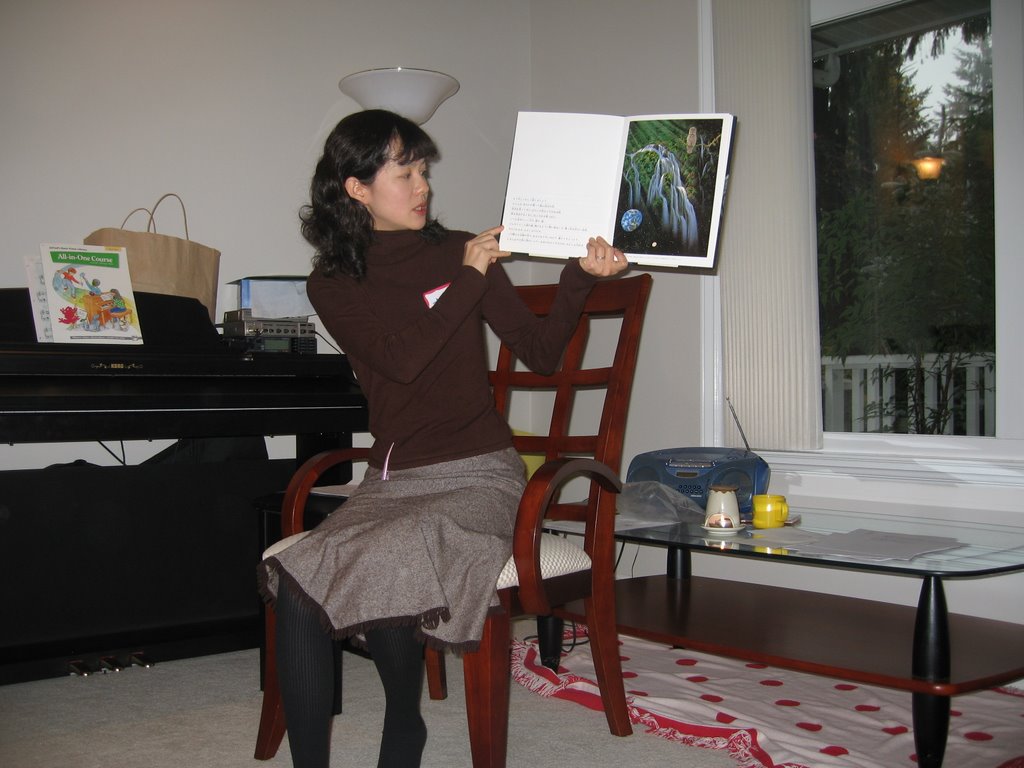
The second session was facilitated by Sayuri, with focus on environment. Adults and older children participated while little ones played at the basement. Sayuri played beautiful meditational music and invited us to close our eyes and get connected with the Mother Earth. Sayuri's voice was mesmerizing and the sense of connection among all of us through meditation was just incredible.

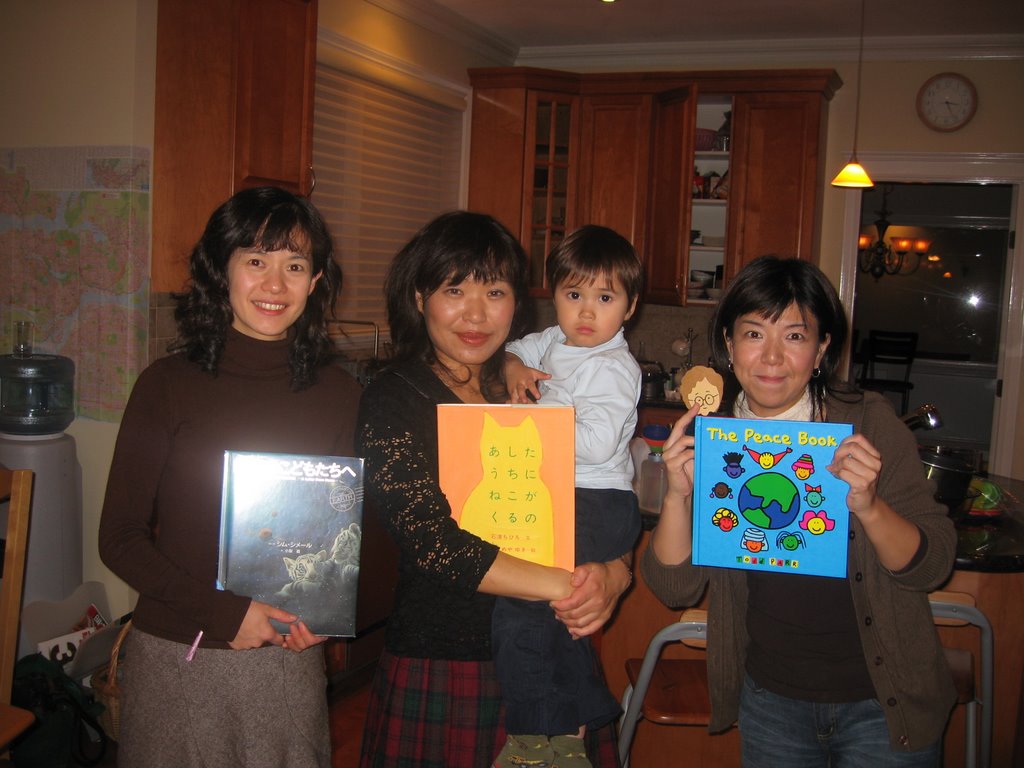
Sayuri read the Japanese translation of 'Children of the Earth - A Letter from Home' by Schim Schimmel. The book helped us realize how much the earth and its species loved us humans and needed our help, and that we are really one big family reliant on each other.

What many participants found particularly fun and effective was the way Sayuri brought soft toys of many endangered animals and became spokesperson for each of them - like Beluga whales in the Arctic Ocean, lions in the African deserts, and bears in the deteriorating forests. She brought photos of glaciers, one of 30 years ago and now to show us how much of it had melted, one of a disappearing island, and another of deserts that are quickly replacing forests.

After seeing the realities of the world, Sayuri had us discuss what we could each do to stop the further damage to the earth and its species, after she shared a list of things that each household can do to reduce CO2 emission by a Japanese non-profit organization, and invited me to speak about the 10 things that I had recently started doing - like bringing my own towel, grocery bags, and coffee mug when going out, and using recycled paper products if used at all and use a half of what I used before.

Our group came up with many creative and doable ideas like showering less, walking to and from school, driving a hybrid car if we have to drive, composting, drying laundry indoors, using biodegradable products, turning off appliances like jars and computers. Sayuri said that environmentalist David Suzuki's family of four only produced one plastic-bag full of garbage per month, and that really shocked me. I have been doing what I can, and I can do a lot more!

One challenge expressed by a mother was that it was hard for her to convince her Canadian husband to have a more earth-friendly lifestyle - its thriftiness to him seems like one that belonged to poor people. Some suggested ideas like having their children influence their fathers, and showing numbers like hydro bills being effective to encourage awareness in one's spouse.

At the end each family group or individual presented a list of things they can and will do to reduce their impact on the environment. It was impressive how young children were so involved with this exercise, empowering their parents to think differently from what they were used to.

Another wonderful material that Sayuri shared with us was the legendary speech by Severn Suzuki, David Suzuki's daughter at the 1992 Earth Summit in Brazil (for its text, go to http://gnome24.com/nature/severn/speech_01.html) How far have we come, 15 years later, now that CO2 emission is still increasing at an alarming rate? I am just made aware how oblivious I have been for all these years, being bogged down on micromanagement of family matters and my self-centred business and academic pursuits. I listen to Severn now. We cannot afford not to listen any more.

Thank you Sayuri for doing extensive research on the current situations of the earth and yet having us connect with the nature and the species with love and positive prospects for action. This is only the beginning.

With love and appreciation,

Satoko

Tuesday, November 14, 2006

Report of 'Families Creating Tomorrow's World' Part 1

This event was held in Japanese, but I want to share the wonderful experience with the wider community, so I will write this report in English.

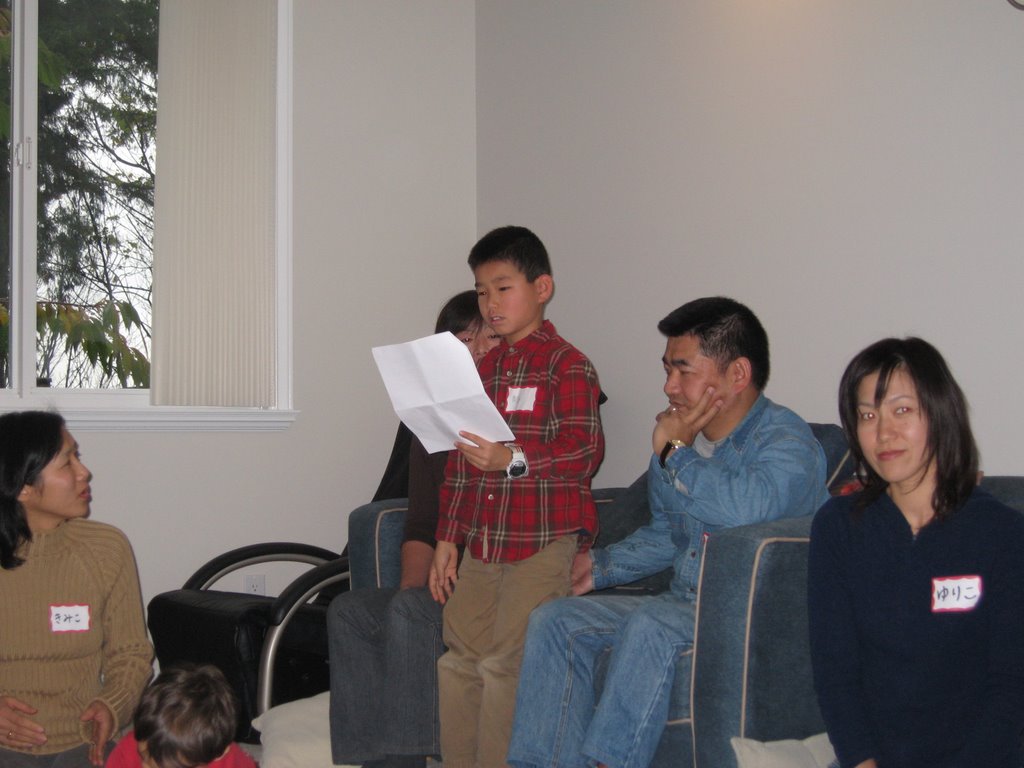
'Parents and Children Creating Tomorrow's World' was held on Sunday November 12th, 2006 at Satoko's house (the home of Peace Philosophy Centre for now) from 10 AM to 12:30 PM with 11 families (12 adults - 1 father and 11 mothers and 21 children age 0 to 9) and 5 adults. The event was held to raise awareness for peace and sustainability among families and for them to create actual plans to save this world.

Peace Philosophers of today's event were: Noriko Ashizawa, an early childhood educator who grew up in Nagasaki and currently teaches at a Japanese language school in Vancouver, Sayuri Ishimoto, also an early childhood educator currently studying to be a licensed preschool teacher in the Capilano College ECE (Early Childhood Education) Program, and Makie Blaine, who shared her magical cooking skills by making healthy and delicious snacks for us.

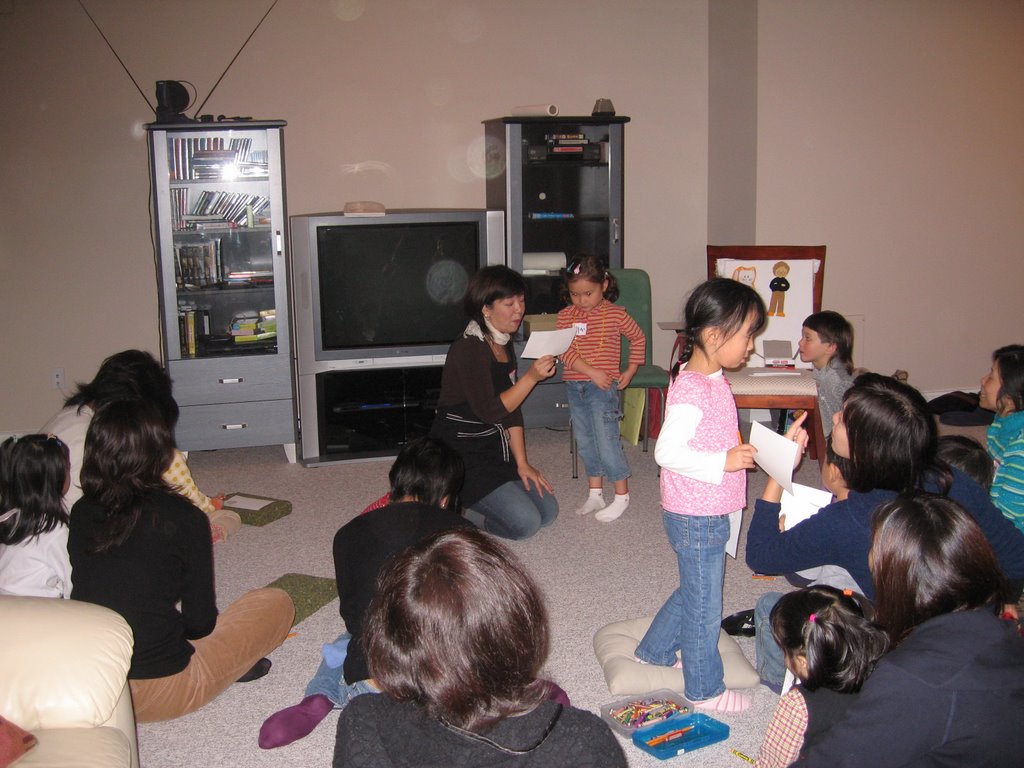
The first part of the morning was facilitated by Noriko and her session was focused on peace. She used the DVD 'Peace Message' created by Ronnie Alexander that came with the general catalogue of Kyoto Museum for World Peace, Ritsumeikan University. She brought hand-crafted felt dolls of the cat Popoki and Ronnie, two main characters in the DVD, and children were magically introduced into the colourful journey of exploring peace with Popoki and Ronnie. What is peace? What colour is it? What does it smell like? What does it sound like? Is peace being able to help each other? Is peace about loving each other?

After showing the DVD, Noriko invited the children to draw on a piece of paper what peace was to each - also with a drawing of what their loved ones would look like when they are the happiest. Some children shared with us what they drew. Ms. E said peace was being able to play with her friends, being read to, and being able to write letters. Mr. K said peace was swimming. For Ms. M, the happiest she saw in her mom was when she cooked.

Noriko read to us 'the Peace Book' By Todd Park that talks about what peace could be about - e.g. sharing food, hugging friends, having a house to live in, being able to travel, being free, and being who you are. Then the room blacked out and now we were in the opposite world - we were in Nagasaki on August 9th, 1945 when the second atomic bomb on the human kind was dropped on the city and killed 70,000 people. It was the world where we were not free, we didn't have food, we were too hurt to hug each other, we didn't have a house to live in, we weren't able to travel, we weren't free, and we weren't who we were. With another blackout, we came back to the peaceful world.

Peace has to be earned. It has to be earned every day, not just for oneself but for all others. Not just for the human kind but for all species. This is the message that I learnt from Noriko's session. Being from Nagasaki, she carries special energy for empowering people with hope for peace, the kind of hope that revived the city from the devastation in 1945.

Thank you Noriko for sharing your passion for peace with us, and as always, your magical skills to draw children's attention and brings out the best of them. I will continue on to the next part.

Satoko