Tuesday, November 28, 2006

"Miracle in Fushun" Workshop by Tatsuo Kage

I attended the workshop "From Devils to Humans - Miracle in Fushun(撫順の奇跡)," given by historian Tatsuo Kage, held on November 23rd at Nikkei Heritage Centre in Burnaby, BC. Mr. Kage showed us a documentary video in which former soldiers and Kenpei (military police) officers gave testimony about the atrocious war crimes that they committed in China during the 15-year war (1931-1945) of invasion by Japan, and how one thousand of the Japanese prisoners were treated humanely and became repentant at the Fushun War Criminal Camp, and became peace activists upon repatriation. After the video Mr. Kage gave us a lecture on the "three miracles" that the Fushun experience brought about - "One, why Japanese prisoners were generously treated; two, how they became repentant; and three, how the heritage of their unusual experience is carried on by younger people in Japan" (from the lecture synopsis prepared by Mr. Kage) . During the question and answer period, many of the over 30 participants who filled the meeting room at Nikkei Centre actively participated, including the several Chinese students and professionals whom we were very fortunate to have that evening (in the photo, Mr. Kage answers questions from Arc Z. Han and Vancent Zhu).

I had read about the Fushun war criminals before in the book (『なぜ加害を語るのか』), or "Why We Talk About Our Crimes"' by Shin-ichiro Kumagai (Iwanami Booklet No. 659), but I knew I had known nothing when I saw the scene in the video where a former Kenpei officer Mr. Tsuchiya visited the daughter of the Chinese man whom he tortured and killed in 1936. The visit took place in 1990 when the daughter, Ms. Zhang, was now a professor at a medical university. The former officer was bowing his head on the floor, crying and apologizing to Ms. Zhang. She was wiping tears off her eyes, and at the end she took Tsuchiya's hands.

Crime, repentance, forgiveness, courage, and perhaps love and hope.... I cannot possibly begin to describe in words the emotions that filled the space that the former aggressor and its victim shared. I should not easily interpret the scene as one of forgiveness. The hand-shake with a man who killed her father must have been one of the most courageous and difficult things that she did in her life, and what drove that act of benevolence and what it really meant to her, to Tsuchiya, and people of China, Japan, and the world from the time of the war to now, is in God's realm. It is a miracle. It sends a message to the human kind that it should never forget - devils can become humans, and humans can become devils. The story of Miracle in Fushun has to be learned over and over again, for creating peace in today's and tomorrow's world.

Shuichi Kato, a prominent public intellectual and an outspoken critic of the growing conservatism in Japan, said in a radio interview with NHK in August 2005, "Young generations of today's Japan are not responsible for the war crimes of their ancestors, but they have a responsibility for learning the history and examine whether the elements of the society that caused the past crimes are still found in today's society or not." Kato points out four such elements that still exist in today's Japan in his book "War Responsibility of the Post-war Generations" (Iwanami Booklet No. 67) - manipulation by government through mass media, conformism, national isolationism (leading to ethnocentrism), and discrimination of all sorts. If these societal characteristics are still there, we may commit the same crimes again, so we must always maintain our critical thinking capabilities, and work to eliminate these elements of society.

What Kato recommends is not easy, but it can be done. I will use the lesson from Fushun in my everyday life, from moment to moment, starting now.

With my heartfelt thanks to Mr. Kage for this incredible learning opportunity.

Satoko

Monday, November 27, 2006

BAYT 1st Event


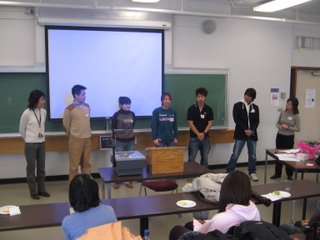
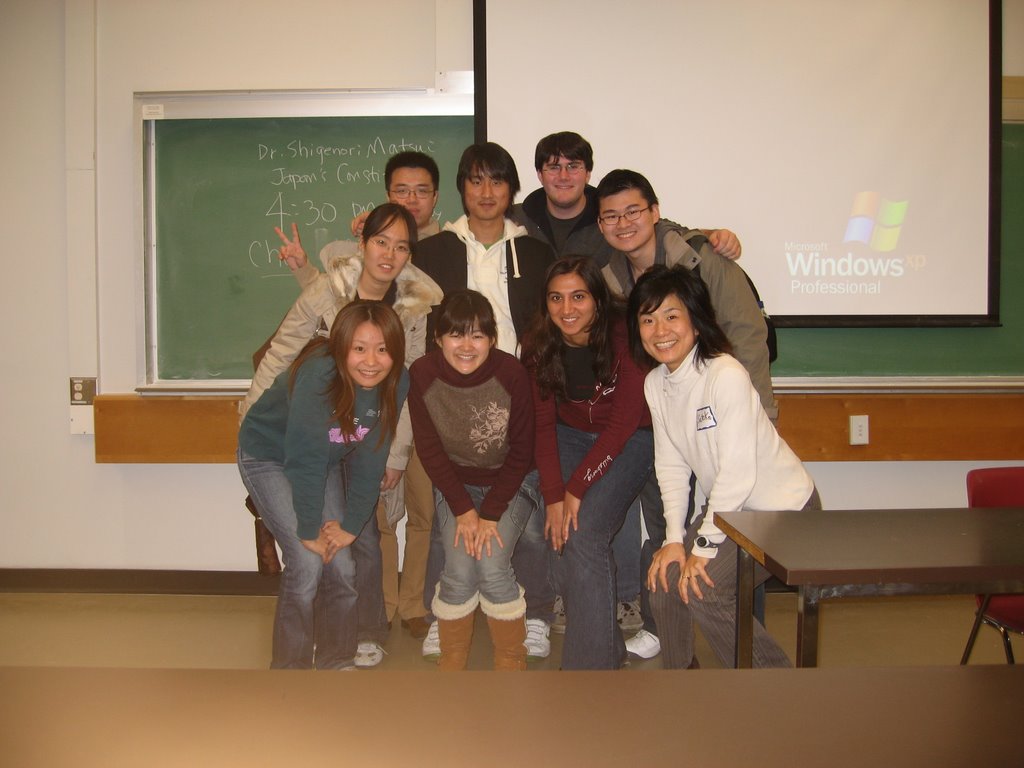
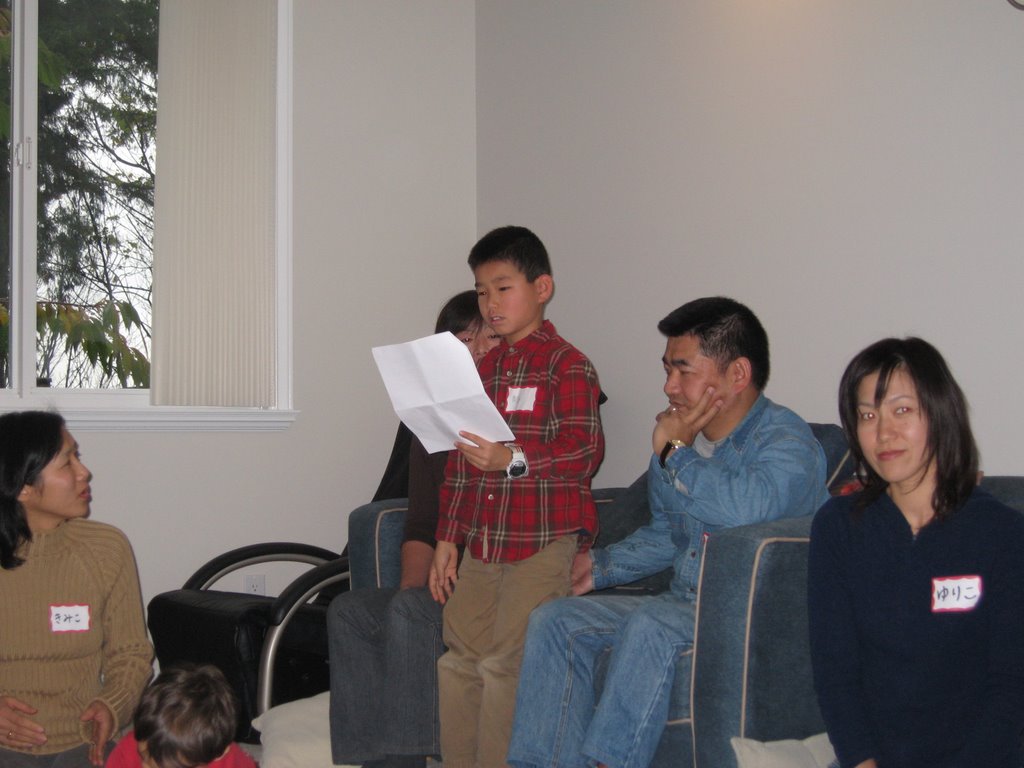
Congratulations! The first event of BAYT - Bringing Asian Youth Together was successfully held at UBC Point Grey Campus from 12:30 to 2:00 PM on November 24, 2006. The event started with the introduction of the original planning members (in the first photo - from right, Hyoshin, Zo, Vincent, Chinatsu, Wakiko, Arc, and Satoko). Absent that day was Ken, who created the BAYT logo.

Then we did a PowerPoint presentation on BAYT, from how it started, what we are going to do, general rules to our mission statement. In summary, the idea of bringing Asian youths together for friendship and understanding started during a workshop on reconciliation in Northeast Asia at the Asia Regional Conference of the World Peace Forum, held on June 25th, 2006. Some participants of the workshop identified an opportunity for such a project in Vancouver where there are so many students from the region. The original planning members are students and staff members of UBC and Langara College from China, Korea, and Japan, and eventually we want to expand to the larger communities. The purpose of this first event was really to introduce the idea of BAYT, involve more people and get more ideas than what we already have - film screening, guest speakers, social events, etc. At the end we divided the participants into three small groups to get more ideas about what we can do. Stay tuned for upcoming events!

The mission statement BAYT, still work in progress and open for suggestions is:

'The central idea of BAYT is to promote open and impartial dialogue among Asian youths, such as those from China, Korea and Japan. By exchanging opinions, leaning from each other and obtaining deeper knowledge, we will together broaden perspectives of the issues affecting East Asia and deepen understandings at grass-roots level. We believe this will bring harmony to the East Asia.'

We were so fortunate to have more than 20 people in attendance, some of whom volunteered to get involved as a planning member. Our upcoming events will be a year-end social activity, and some film-screening opportunities in the early 2007, such as 'Japan's Peace Constitution' directed by John Junkerman, and 'Annyong Sayonara' directed by Kim Tae-iI and Kumiko Kato. If you would like more information about BAYT, please email bringingasianyouthstogether@gmail.com

This project is going to grow and we will together bring harmonious future to Asia and to the world!

Satoko :)

Sunday, November 26, 2006

A Song About the World Putting an End to War

Here is a song that Chihiro Otsuka shared with me, one that her daughter sang at the peace choir of her school. I was deeply moved by these lyrics and thought that it was the world adopting 'and practicing' the Article 9 of the Japanese Constitution. I visualize this song in my meditation. Is it something that one can only imagine? If everybody imagines it, it becomes reality. Thank you Chihiro for sharing this beautiful song! Love to the world, Satoko

Here is the song.

Last Night I Had The Strangest Dream (Words and music by EdMcCurdy)

Last night I had the strangest dream
I'd ever dreamed before
I dreamed the world had all agreed
To put an end to war

I dreamed I saw a mighty room
Filled with women and men
And the paper they were signing said
They'd never fight again

And when the paper was all signed
And a million copies made
They all joined hands and bowed their heads
And grateful pray'rs were prayed

And the people in the streets below
Were dancing 'round and 'round
While swords and guns and uniforms
Were scattered on the ground

Last night I had the strangest dream
I'd never dreamed before
I dreamed the world had all agreed
To put an end to war.

Sunday, November 19, 2006

(Japanese) Feedback to 'Tomorrow's World'

(This is the summary of the participants' feedback to the November 12 event, in Japanese.)

11月12日に開催されました「親子で創る明日の世界」に寄せられた感想からここにご紹介します。皆さんたくさん書いていただき、全て掲載したかったのですが、お忙しい皆さんに読んでいただけるくらいの量にまずまとめるのが大事と思い、「ダイジェスト版」を作りました。ここに載っていないことでたくさんの素晴らしいご意見やご提案がありましたのでそれはまた別の方法で皆さんと share したいと思います。ありがとうございました!

  • できるところから、小さいことから始めるという物事の基本に沿って進めていけばそれが大きな力になりますから自身も少しづつですが、学びながら地球保護の為に初めていきますよ。
  • 小さい子供たちにはよく理解できる内容であったと思います。教育という観点から見ても素晴らしいイベントでした。
  • 法子さんのクリエイティブさ、子供達の心をつかむ生き生きとした表現には脱帽です。
  • 幸せで当たり前な状況から、平和でない世界はどういう世界なのかを想像させる展開は、平和とは何かを認識する、または、させるためにとても有効な方法だと改めて感心させられました。
  • まきえさんの手作りのアーモンドクッキーとさつまいもの茶巾は、甘さが控えめで、
    とてもおいしかったです。
  • さゆりさんの環境に関するお話が、瞑想から入るというアイデアはとても斬新で、Breakの後に、気持ちを切り替える、トピックに気持ちを集中させる上で、とても効果的だったと思います。地球は泣いている、言葉を話せない動物に代わってのさゆりさんの語りは、ほんとうに引き込まれました。
  • まず、私ができることは、ハンカチを持参して、ペーパータオルを使わない。ショッピングバックを持参する。使わない電気は消す。(特にパソコン)トイレットペーパーはミシン目3つまで。お箸、又はフォークを学校に持参する。以上の5つは必ず実行します。
  • トップダウン式のお勉強ワークショップではなく、「優しい」「楽しい」「うれしい」=平和、に対峙するところの「乱暴な」「怖い」「悲しい」=戦争を擬似体験する旅にいかせてもらったような気がしてます。平和への第一歩として、子供も大人も一人一人が「私にとっての平和」を心に描くことから、まずは始めてみればいいんだなと気づかせてくれたワークショップでした。パート2では、家庭でできるCO2削減ということで、自分への課題を出したので、ちゃんとやらないとなーと思ってます。娘は結構チェックが厳しいのでがんばります。
  • イベント後、帰宅してから子供が部屋の電気を消して歩いてくれたことも大きな収穫でした。やはり意識があるのとないのとでは差が出ますね。
  • 愛する人が幸せな時を絵に描くと言うのは子供たちに相手を思いやるという心を育てるのに良いアイディアだと思いました。
  • さゆりさんは環境をテーマにされて、最初の子供と一緒にしたメディテーションは今後もいろんな所でされるべき(学校など)と思います。子供こそメディテーションが必要であり、心の安定などに大切な要素だと思います。
  • 日本に住んでいるときは、正直毎日出しているごみの分別「めんどくさい」。冷暖房は快適に過ごすために常につけておくのは当たり前!暗いのが嫌なので電気もつけっぱなし。食べ切れなかったご飯は「ごめんなさい」といってゴミ箱へ…本当に恥ずかしいことばかりしていました。
  • イベントの帰りの車の中で5歳の娘との会話
    母「ねぇ、今日何について学んだかわかる?」娘「うん、平和ー!」母「じゃあ、平和ってどんなこと?」娘「うーん・・・わかんなーい・・・」母「じゃあさ、”平和”って良い言葉?悪い言葉?」娘「良い言葉~っ!!」母「じゃあ、あなたには平和がある?」娘「持ってるぅ~♪」
    ひとくちに「平和ってどういうこと?」って聞かれたら大人でも説明するのは難しいですよね。でも、今回のような会を通して、子供達は子供達なりに”平和”を感じ取っていってるのかな、って感じました。そして、今彼女達が持っている”平和”、私達が守っていきたい。改めてそう思うことができた素晴らしい会でした^^
  • 特に印象に残ったのが、スイッチを一瞬消してそれを原爆の炸裂と結びつけたこと、ぽっぽきのストーリーへの導入のしかた、また、世界中の動物達がゲストとなり、彼らの窮状を訴えたこと、など、素晴らしいアイデアだったと思います。
  • まきえさんの健康スナックは甘さ控えめでとても美味しかったです。

今、ハワイ・マウイ島でこれをまとめています。地元の鳥たちの鳴き声と共に朝を過ごすのがとても気持ちがいいです。みなさんの感想の言葉の一つ一つが持つ力強さに感動し、そして心から感謝しています。最後に、マハトマ・ガンジーの言葉を一つ引用したいと思います。

'Happiness is when what you think, what you say, and what you do are in harmony. '

- Mahatma Ghandhi, Indian ascetic & nationalist leader (1869 - 1948)

「幸せとは自分の考えること、自分の言うこと、そして自分のすることが調和しているときである。」

今からマウイの青い空を皆さんに送ります。

感謝の気持ちとともに

聡子

Thursday, November 16, 2006

'Families Creating Tomorrow's World' Part 3

For our event, Makie Blaine prepared all-natural hand-made healthy snacks - 'almond cookies' with ingredients like almond butter, maple syrup, spelt flour and coconut milk, and 'sweet potatoes and apples, 'chakin' way,' because it looks like chakin-sushi, or wrapped sushi, as you can see in this photo with Makie. Thank you Makie!


Another highlight of the event was peace songs shared by Chihiro and her daughter, with the sign language. Chihiro's daughter belongs to the peace choir at her school. Here are the lyrics of the song:

Peace is the world smiling
Peace is a gentle dove
Peace is caring
Peace is sharing
Peace is filling the world with love

Thank you for sharing this beautiful song.


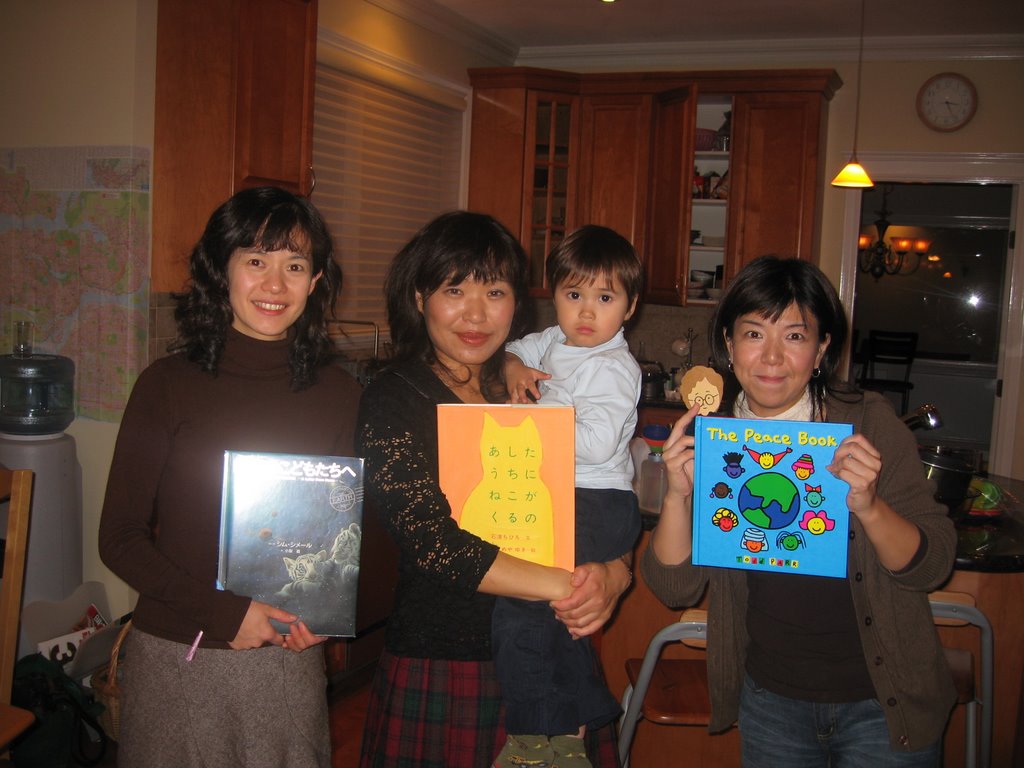
Here is the photo with the three Peace Philosophers of today - from left, Sayuri, Makie and her son, and Noriko. Thank you so much, this event happened because of your leadership and passion.

My sincere thanks to the three students - Kayo, Shikiko, and Riho who helped out with the event, and Yumiko Kikuno, who took photos, stayed later to clean up and keep me company after the event. Above all, thanks to all for participating and helping. I hope and I am sure that you are all enjoying the difference that this event has made in your life and the difference that you are bringing to this world.

Lots of love,

Satoko

Wednesday, November 15, 2006

'Familes Creating Tomorrow's World' Part 2

The second session was facilitated by Sayuri, with focus on environment. Adults and older children participated while little ones played at the basement. Sayuri played beautiful meditational music and invited us to close our eyes and get connected with the Mother Earth. Sayuri's voice was mesmerizing and the sense of connection among all of us through meditation was just incredible.

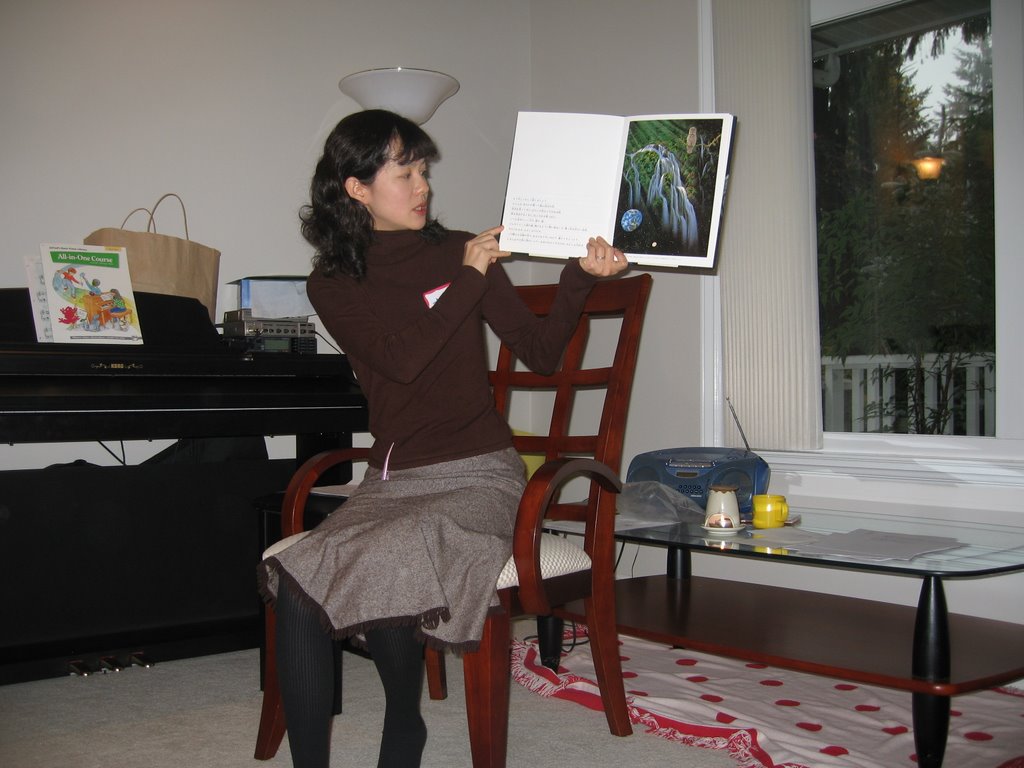
Sayuri read the Japanese translation of 'Children of the Earth - A Letter from Home' by Schim Schimmel. The book helped us realize how much the earth and its species loved us humans and needed our help, and that we are really one big family reliant on each other.

What many participants found particularly fun and effective was the way Sayuri brought soft toys of many endangered animals and became spokesperson for each of them - like Beluga whales in the Arctic Ocean, lions in the African deserts, and bears in the deteriorating forests. She brought photos of glaciers, one of 30 years ago and now to show us how much of it had melted, one of a disappearing island, and another of deserts that are quickly replacing forests.

After seeing the realities of the world, Sayuri had us discuss what we could each do to stop the further damage to the earth and its species, after she shared a list of things that each household can do to reduce CO2 emission by a Japanese non-profit organization, and invited me to speak about the 10 things that I had recently started doing - like bringing my own towel, grocery bags, and coffee mug when going out, and using recycled paper products if used at all and use a half of what I used before.

Our group came up with many creative and doable ideas like showering less, walking to and from school, driving a hybrid car if we have to drive, composting, drying laundry indoors, using biodegradable products, turning off appliances like jars and computers. Sayuri said that environmentalist David Suzuki's family of four only produced one plastic-bag full of garbage per month, and that really shocked me. I have been doing what I can, and I can do a lot more!

One challenge expressed by a mother was that it was hard for her to convince her Canadian husband to have a more earth-friendly lifestyle - its thriftiness to him seems like one that belonged to poor people. Some suggested ideas like having their children influence their fathers, and showing numbers like hydro bills being effective to encourage awareness in one's spouse.

At the end each family group or individual presented a list of things they can and will do to reduce their impact on the environment. It was impressive how young children were so involved with this exercise, empowering their parents to think differently from what they were used to.

Another wonderful material that Sayuri shared with us was the legendary speech by Severn Suzuki, David Suzuki's daughter at the 1992 Earth Summit in Brazil (for its text, go to http://gnome24.com/nature/severn/speech_01.html) How far have we come, 15 years later, now that CO2 emission is still increasing at an alarming rate? I am just made aware how oblivious I have been for all these years, being bogged down on micromanagement of family matters and my self-centred business and academic pursuits. I listen to Severn now. We cannot afford not to listen any more.

Thank you Sayuri for doing extensive research on the current situations of the earth and yet having us connect with the nature and the species with love and positive prospects for action. This is only the beginning.

With love and appreciation,

Satoko

Tuesday, November 14, 2006

Report of 'Families Creating Tomorrow's World' Part 1

This event was held in Japanese, but I want to share the wonderful experience with the wider community, so I will write this report in English.

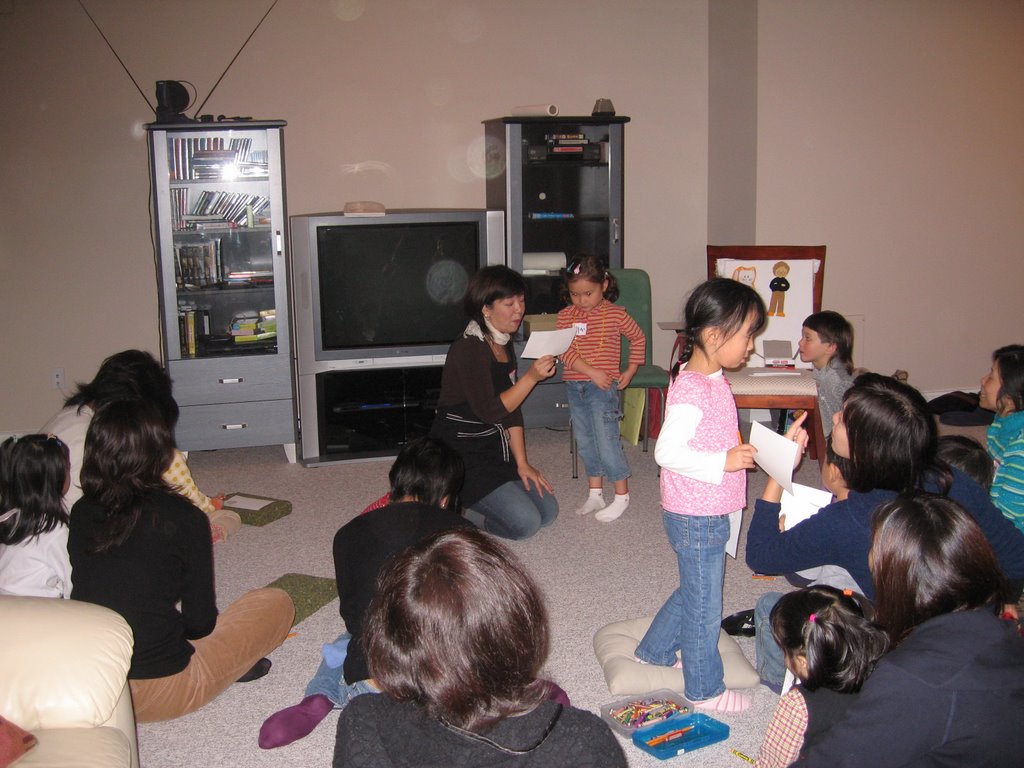
'Parents and Children Creating Tomorrow's World' was held on Sunday November 12th, 2006 at Satoko's house (the home of Peace Philosophy Centre for now) from 10 AM to 12:30 PM with 11 families (12 adults - 1 father and 11 mothers and 21 children age 0 to 9) and 5 adults. The event was held to raise awareness for peace and sustainability among families and for them to create actual plans to save this world.

Peace Philosophers of today's event were: Noriko Ashizawa, an early childhood educator who grew up in Nagasaki and currently teaches at a Japanese language school in Vancouver, Sayuri Ishimoto, also an early childhood educator currently studying to be a licensed preschool teacher in the Capilano College ECE (Early Childhood Education) Program, and Makie Blaine, who shared her magical cooking skills by making healthy and delicious snacks for us.

The first part of the morning was facilitated by Noriko and her session was focused on peace. She used the DVD 'Peace Message' created by Ronnie Alexander that came with the general catalogue of Kyoto Museum for World Peace, Ritsumeikan University. She brought hand-crafted felt dolls of the cat Popoki and Ronnie, two main characters in the DVD, and children were magically introduced into the colourful journey of exploring peace with Popoki and Ronnie. What is peace? What colour is it? What does it smell like? What does it sound like? Is peace being able to help each other? Is peace about loving each other?

After showing the DVD, Noriko invited the children to draw on a piece of paper what peace was to each - also with a drawing of what their loved ones would look like when they are the happiest. Some children shared with us what they drew. Ms. E said peace was being able to play with her friends, being read to, and being able to write letters. Mr. K said peace was swimming. For Ms. M, the happiest she saw in her mom was when she cooked.

Noriko read to us 'the Peace Book' By Todd Park that talks about what peace could be about - e.g. sharing food, hugging friends, having a house to live in, being able to travel, being free, and being who you are. Then the room blacked out and now we were in the opposite world - we were in Nagasaki on August 9th, 1945 when the second atomic bomb on the human kind was dropped on the city and killed 70,000 people. It was the world where we were not free, we didn't have food, we were too hurt to hug each other, we didn't have a house to live in, we weren't able to travel, we weren't free, and we weren't who we were. With another blackout, we came back to the peaceful world.

Peace has to be earned. It has to be earned every day, not just for oneself but for all others. Not just for the human kind but for all species. This is the message that I learnt from Noriko's session. Being from Nagasaki, she carries special energy for empowering people with hope for peace, the kind of hope that revived the city from the devastation in 1945.

Thank you Noriko for sharing your passion for peace with us, and as always, your magical skills to draw children's attention and brings out the best of them. I will continue on to the next part.

Satoko